Our immune system is always ON doing good things. In healthy aging, it spends most of its time in a quiet, peacetime mode: repairing tissue, clearing debris, watching for cancer trouble, and tolerating the ordinary traffic of food, microbes, and pollen that crosses our mucosal borders each day. Only when the danger signals from those borders cross a threshold does the system shift into its other personality: a high-energy, high-cost defense mode that is designed to run as a one-shot cascade and then stand down.
But that familiar picture is still incomplete. The immune system does not simply have a healthy setting and a sick setting; it has three distinct modes of operation. In the first, healthy homeostasis, the body stays in repair-and-surveillance mode, with low background inflammation and efficient housekeeping. In the second, acute innate defense, the body launches a short, powerful pulse to control infection or injury and then return to baseline if resolution succeeds. In the third, chronic activation, the same useful machinery stays switched on too long, and what was meant to protect us becomes a driver of disease, aging, and death.
If this sounds abstract, it is not. It is the cellular logic behind the major diseases of aging. Muscle cells lose insulin sensitivity, adipose cells become cytokine factories, vascular endothelium becomes dysfunctional, bone marrow stays overdriven, microglia remain inflammatory, and organs such as the liver, heart, kidneys, lungs, and pancreas all begin to fail in their own characteristic ways. In other words, chronic immune activity is the biological route by which type 2 diabetes, cardiovascular disease, Alzheimer’s disease, metabolic syndrome, frailty, and related old-age illnesses are made.
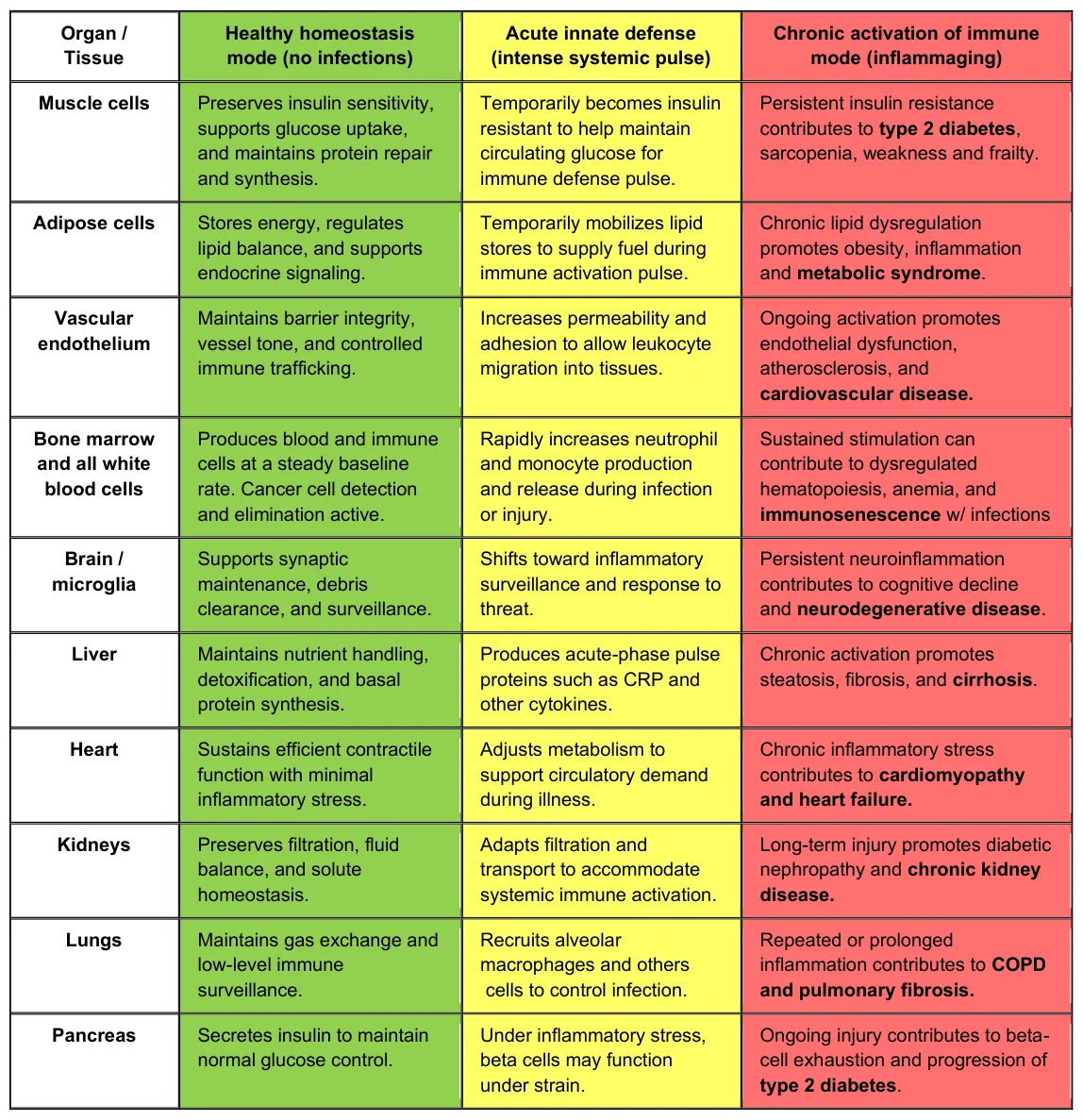
The next table puts that argument on one page, showing how the same immune program looks in health, in a normal short‑lived defensive pulse, and in the chronic, stuck‑on state we call inflammaging.
Major tissues behave in three distinct immune modes: healthy homeostasis, an acute innate defense pulse, and chronic activation or inflammaging. In the left column, organs spend most of their time in quiet repair, surveillance, and normal metabolism. In the middle column, they temporarily rewire themselves to survive an infection or injury, shunting energy and resources toward short‑term defense. In the right column, that same emergency program never fully turns off, and the temporary changes of the pulse harden into the familiar diseases of aging: insulin resistance, sarcopenia, endothelial dysfunction, neurodegeneration, organ failure, and frailty.
Immune system modes: Health, Defensive Pulse, Damaging
Text in this figure
Organ / Tissue Healthy homeostasis mode (no infections) Acute innate defense (intense systemic pulse) Chronic activation of immune mode (inflammaging) Muscle cells Preserves insulin sensitivity, supports glucose uptake, and maintains protein repair and synthesis. Temporarily becomes insulin resistant to help maintain circulating glucose for immune defense pulse. Persistent insulin resistance contributes to type 2 diabetes, sarcopenia, weakness and frailty. Adipose cells Stores energy, regulates lipid balance, and supports endocrine signaling. Temporarily mobilizes lipid stores to supply fuel during immune activation pulse. Chronic lipid dysregulation promotes obesity, inflammation and metabolic syndrome. Vascular endothelium Maintains barrier integrity, vessel tone, and controlled immune trafficking. Increases permeability and adhesion to allow leukocyte migration into tissues. Ongoing activation promotes endothelial dysfunction, atherosclerosis, and cardiovascular disease. Bone marrow and all white blood cells Produces blood and immune cells at a steady baseline rate. Cancer cell detection and elimination active. Rapidly increases neutrophil and monocyte production and release during infection or injury. Sustained stimulation can contribute to dysregulated hematopoiesis, anemia, and immunosenescence w/ infections Brain / microglia Supports synaptic maintenance, debris clearance, and surveillance. Shifts toward inflammatory surveillance and response to threat. Persistent neuroinflammation contributes to cognitive decline and neurodegenerative disease. Liver Maintains nutrient handling, detoxification, and basal protein synthesis. Produces acute-phase pulse proteins such as CRP and other cytokines. Chronic activation promotes steatosis, fibrosis, and cirrhosis. Heart Sustains efficient contractile function with minimal inflammatory stress. Adjusts metabolism to support circulatory demand during illness. Chronic inflammatory stress contributes to cardiomyopathy and heart failure. Kidneys Preserves filtration, fluid balance, and solute homeostasis. Adapts filtration and transport to accommodate systemic immune activation. Long-term injury promotes diabetic nephropathy and chronic kidney disease. Lungs Maintains gas exchange and low-level immune surveillance. Recruits alveolar macrophages and others cells to control infection. Repeated or prolonged inflammation contributes to COPD and pulmonary fibrosis. Pancreas Secretes insulin to maintain normal glucose control. Under inflammatory stress, beta cells may function under strain. Ongoing injury contributes to beta- cell exhaustion and progression of type 2 diabetes.
This first diagram matters because it shows the same cell types in three different immune states: healthy homeostasis, acute innate defense, and chronic activation. The point is not merely that inflammation exists, but that the whole body changes its behavior depending on which mode dominates. In the healthy state, tissues are maintained, repaired, and surveilled with minimal collateral damage; in the acute defense state, the body temporarily reallocates energy and immune traffic to meet the threat; and in the chronic state, the same machinery becomes a burden that steadily erodes reserve and function.
This matters because if chronic immune activity leads directly to old-age disease, then the conclusion is unavoidable: we must resolve infections, shut down the alarm properly, and reset the system back to homeostasis and repair. If we do not, the body remains stuck in a state of permanent emergency, and that emergency slowly becomes the disease process itself. Aging, then, is not just a matter of time; it is the accumulated cost of unresolved immune activation.
The next figure shows the immune cascade that creates that pulse and, when all goes well, lets it end.
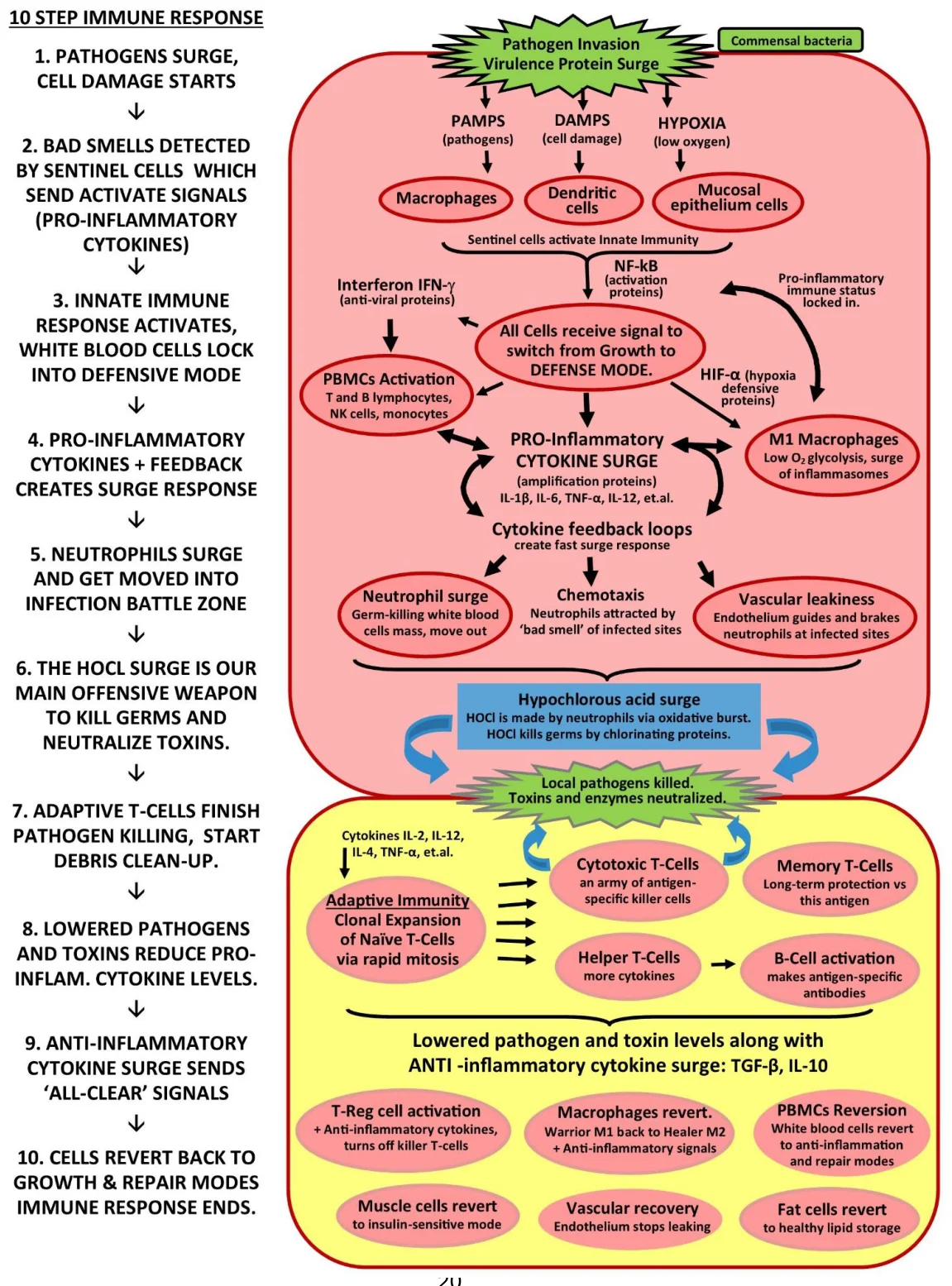
The system flips when the combination of pathogen load, tissue injury, and virulence toxins pushes local danger signals past a threshold. Sentinel cells at the borders detect this surge and send an unambiguous message: all-in. Pro-inflammatory cytokines spike, blood vessels loosen, neutrophils are called up from the bloodstream, and the familiar ten-step cascade begins, step by step, toward a decisive burst of hypochlorous acid and other oxidants.
That cascade is not meant to be a permanent setting. It is a pulse. The same system that ramps up in ordered stages also contains the seeds of its own shutdown. As pathogen numbers fall and chlorinated debris is cleared, pro-inflammatory cytokines fade, anti-inflammatory mediators rise, macrophages switch from warrior to healer, and regulatory T-cells apply the brakes. In a healthy system, this arc completes itself, and the tissues slide back into the peacetime basin of attraction where repair, growth, and quiet surveillance resume.
The goal of the rest of this chapter is to make that pulse visible step by step. Only after the machinery is clear can we fully understand why chronic mouth and airway infections trap so many older adults in the wrong state for far too long, and why resolving those infections is the shortest path back to homeostasis, repair, and long-term survival.
Here are the details of our 10 step immune system cascade that has to occur in its entirety for us to regain health.
Step 1: Pathogens Surge, Cell Damage Starts
- Pathogen surge – Germ numbers explode and begin damaging local tissue; the "invading army" crosses the border.
- PAMPs (Pathogen-Associated Molecular Patterns) – Molecular ID tags on microbes that mark them as foreign and dangerous.
- DAMPs (Damage-Associated Molecular Patterns) – Distress signals from injured cells that say "our tissue is under attack".
- Virulence protein surge – Microbial toxins and enzymes that actively harm tissue and intensify the assault.
Step 2: Bad Smells Detected by Sentinel Cells Which Send Activate Signals (Pro- Inflammatory Cytokines)
- Sentinel cells (macrophages, dendritic cells, mucosal epithelial cells) – Front-line border guards that sense PAMPs, DAMPs, hypoxia, and metabolic "bad smells," then send out alarm signals.
- NF-κB activation – An internal "emergency switch" that turns on genes for inflammatory cytokines and defense proteins.
- Interferon (IFN) response – Anti-viral proteins mobilized when viral PAMPs are detected.
- HIF-1α and hypoxia – Low oxygen in inflamed tissue stabilizes HIF-1α, helping cells shift metabolism toward emergency defense mode.
Step 3: Innate Immune Response Activates, White Blood Cells Lock Into Defensive Mode
- All cells receive signal to switch from growth to defense mode – Sentinel cytokines flip nearby cells into high alert and inflammation.
- Pro-inflammatory immune status locked in – Sustained signals ensure the defense cascade doesn't prematurely shut down.
Step 4: Pro-Inflammatory Cytokines + Feedback Creates Surge Response
- Pro-inflammatory cytokine surge (IL-1β, IL-6, TNF-α, IL-12, et al.) – A wave of messenger proteins that rapidly amplify the inflammatory response.
- M1 macrophages – Macrophages shift into "warrior mode," producing more pro- inflammatory cytokines, switching to low-oxygen glycolysis, and surging inflammasomes for pathogen attack.
- Cytokine feedback loops – Autocrine and paracrine amplification creates a fast, explosive surge response.
- Endothelium activation and vascular leakiness – Blood vessel linings loosen and express "guidance signals," allowing immune cells and plasma proteins to exit into the battlefield.
Step 5: Neutrophils Surge and Get Moved Into Infection Battle Zone
- Neutrophil surge – Germ-killing white blood cells mass in the bloodstream and prepare to move out.
- Chemotaxis – Neutrophils follow cytokine and chemokine trails toward the strongest "smell" of infection, drawn by metabolic by-products, toxins, and tissue decay.
- Endothelium guides and brakes neutrophils at infected sites – Vascular linings precisely direct neutrophils to roll, adhere, and transmigrate where needed most.
Step 6: The HOCl Surge Is Our Main Offensive Weapon to Kill Germs and Neutralize Toxins
- Neutrophil oxidative burst – Neutrophils turn on intense oxidative metabolism that produces reactive oxidants.
- HOCl (hypochlorous acid) surge – Neutrophils generate HOCl, a chlorine-based oxidant that rapidly neutralizes microbial proteins and membranes by chlorinating them; this is the decisive crossroads where the infection battle can be won or spill into collateral damage.
- Local pathogens killed, toxins and enzymes neutralized – The chlorine surge disables invaders and their weapons.
Step 7: Adaptive T-Cells Finish Pathogen Killing, Start Debris Clean-Up
- PBMCs activation (T-cells, B-cells, NK cells, monocytes) – Mononuclear white blood cells in the blood receive cytokine and antigen signals and join the response.
- Dendritic cell antigen presentation – Dendritic cells carry pieces of chlorinated pathogens to lymph nodes and "show" them to naïve T-cells.
- Clonal expansion of naïve T-cells – Specific T-cells recognizing that antigen rapidly multiply via mitosis to build a focused army.
- Helper T-cells – Conductors of the adaptive response that secrete more cytokines (IL-2, IL- 12, IL-4, TNF-α, et al.) to support B-cells, cytotoxic T-cells, and macrophages.
- Cytotoxic T-cells – Targeted "assassin" cells that kill infected host cells and help clear remaining pockets of infection.
- B-cell activation and antibodies – B-cells become plasma cells that secrete antigen-specific antibodies, tagging pathogens and toxins for neutralization and clean-up.
- Memory T-cells and B-cells – Long-lived cells that "remember" this invader, enabling a faster, sharper response if it returns.
Step 8: Lowered Pathogens and Toxins Reduce Pro-Inflammatory Cytokine Levels
- Pathogen and toxin clearance – Combined effects of HOCl, phagocytosis, cytotoxic T-cells, and antibodies reduce pathogen load and neutralize toxins.
- Shift in cytokine balance – As the threat drops, signals tilt from pro-inflammatory toward anti-inflammatory mediators.
Step 9: Anti-Inflammatory Cytokine Surge Sends 'All-Clear' Signals
- Anti-inflammatory cytokine surge (IL-10, TGF-β) – "All-clear" messenger proteins that tell the system to resolve inflammation and begin repair.
- Regulatory T-cells (T-Regs) – Brake-pedal cells that shut down excessive T-cell activity, turn off killer T-cells, and help prevent friendly-fire damage.
- Macrophage shift to M2 – Warrior M1 macrophages convert into healer M2 cells focused on debris removal and tissue rebuilding.
Step 10: Cells Revert Back to Growth & Repair Modes—Immune Response Ends
- Tissue cell reversion (muscle, fat, others) – Muscle cells revert to insulin-sensitive mode; fat cells revert to healthy lipid storage; local cells leave emergency metabolism and return to normal storage and repair functions.
- PBMCs reversion – Circulating white blood cells shift back from inflammatory attack mode into anti-inflammation, surveillance, and repair roles.
- Vascular recovery – Blood vessels reseal, endothelium stops leaking, and guidance signals for leukocyte entry are turned off.
- Immune homeostasis – The defense cascade powers down, leaving behind immune memory and restored tissue architecture.
When this cascade runs once, cleanly, from danger to stand-down, the system does what it was designed to do: it saves your life and then gets out of the way so repair and normal metabolism can resume.
Every Infection Response affects the entire body. Cells cannot ignore the activation call.
The essential insight is that infection is never just a local skirmish. The moment danger signals cross threshold at the mucosal border, the entire body is notified: endothelium, liver, muscle, fat, bone marrow, brain, and heart all receive the same all‑in message and temporarily abandon growth and repair to support the war effort. That is why inflammaging is so destructive when the cascade is triggered over and over, the “war setting” becomes the new normal, and no organ is truly off‑duty anymore.
Yet nothing about this God-given cascade is accidental or sloppy. It is exquisitely ordered: PAMPs and DAMPs trigger sentinels, cytokines amplify the alarm, neutrophils manufacture oxidants, T‑cells focus the attack, and, if all goes well, anti‑inflammatory messengers and regulatory cells restore peace. There is no life without this design. A body that could not mount this response would die quickly of trivial infections; a body that cannot turn it off dies slowly of inflammaging.
Chlorine Biochemistry is hiding at the heart of Immunity
At the very center of this life‑saving surge hides a simple chemical that most people associate with laundry and swimming pools. Innate immunity’s chosen blade is biochemical chlorine: hypochlorous acid, HOCl, forged inside neutrophil phagosomes and along NETs as the decisive oxidant that unzips microbial proteins, collapses virulence factors, and sterilizes local terrain. To make that HOCl, the system must first step through a high‑energy reactive oxygen species pathway, converting oxygen and metabolism into superoxide, hydrogen peroxide, and finally myeloperoxidase‑driven chlorine—each step both protective and inherently tissue‑injuring.
That is the catch. Every HOCl pulse that saves a life also cuts host structures and adds to the microscopic repair bill that defines aging. When the cascade runs once, cleanly, from alarm to HOCl surge to N‑chlorotaurine‑mediated shutdown, the damage is repaired and homeostasis returns. When chronic mucosal infections keep re‑lighting the fuse, ROS and HOCl storms become semi‑permanent weather, and the same divine chemistry that was meant to rescue us begins to help wear us out.
Decades of microscopic self-harm trap us in a vicious cycle of aging
Nothing in life is free. Everything has a cost – especially biochemical salvation.
Reactive oxygen species (ROS) and hypochlorous acid are not side characters in this war; they are the blade itself, forged on demand knowing every swing cuts both enemy and host. HOCl’s real power is that it unzips proteins; once key microbial walls, enzymes, and toxins are misshapen, the infection collapses. The more HOCl must be made, the more collateral tissue damage must later be repaired.
The following picture of the free‑radical pathway shows ROS as the necessary precursors that feed into HOCl production and makes clear that every step in that pathway is both life‑saving and tissue‑injuring, all by miraculous design.
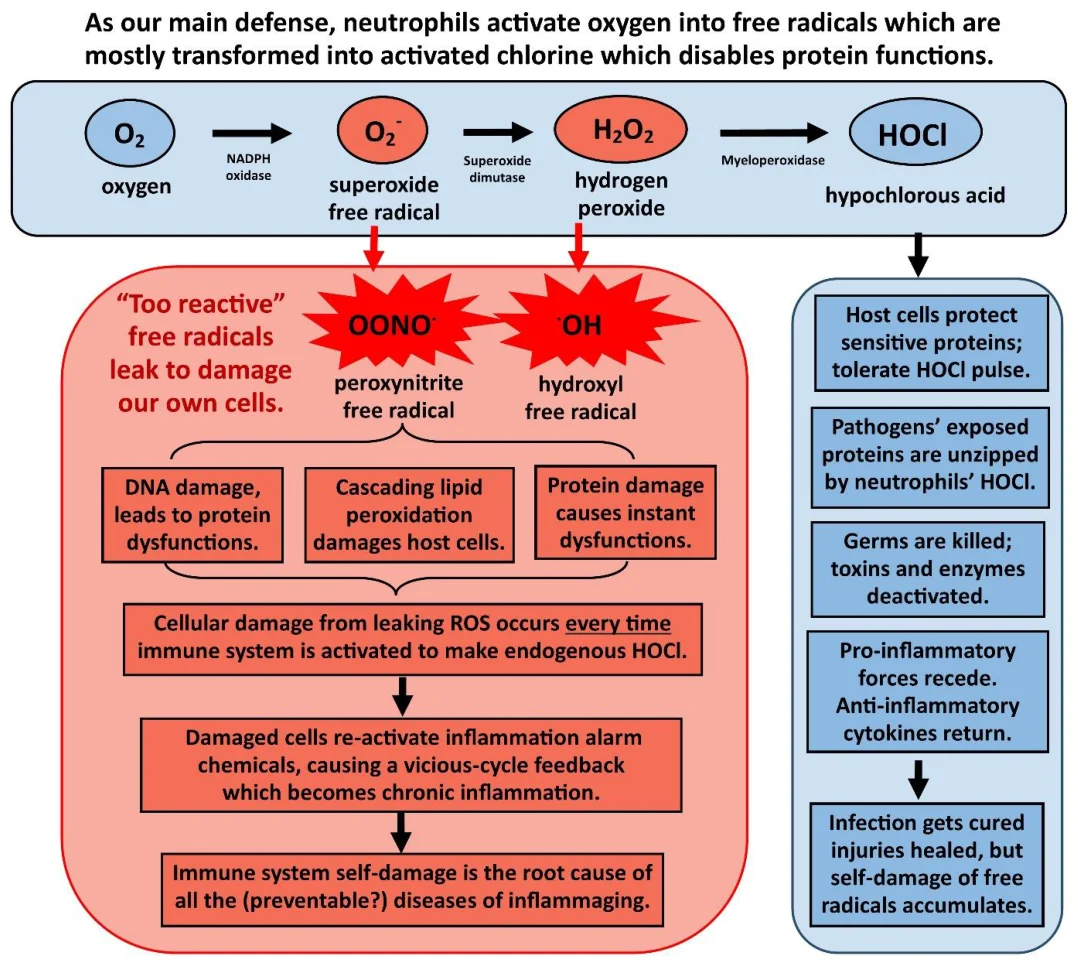
Immune activity is never free; it always costs some tissue. Every “save my life” response leaves microscopic damage that must be repaired later.
Immune system activation becomes self-perpetuating.
All immune activity is inherently costly and should be minimized—or, better yet, rarely needed. Every activation—each cytokine surge, each ROS burst, each HOCl wave—buys survival at the price of microscopic self-injury that must later be repaired. In youth and health, those costs are paid quietly: damage is healed, and the sword goes back into its sheath. With age, chronic mouth and airway infections, and repeated triggers, the charges pile up faster than they can be cleared, and immune activity shifts from heroic to self-destructive.
This is why immune power must be hoarded and protected fiercely. The goal of daily hygiene and crisis-avoidance is not to “boost” a system that is already overtaxed, but to spare it—to keep infections so rare and so small that ROS and HOCl need to be unsheathed as little as possible. When that does not happen—when PAMP and DAMP signals keep rising from persistent mucosal infections—the same double-edged chemistry that once saved us locks into a permanent “on” position.
When the defensive immune cascade cannot resolve we cannot heal.
Any broken part of the immunity cascade can trap us in chronic storms of inflammaging. The pattern is always the same: sentinel cells detect pathogens’ sour scent and send the system “ALL-IN” via pro-inflammatory cytokines. Immune cells everywhere—vascular endothelium, muscle, and fat—lock into their preprogrammed inflamed defense mode, trying to create a neutrophil surge at the infection site.
But something goes wrong in the chain. In cystic fibrosis, a single inherited gene defect produces a chloride-channel protein that cannot properly move chloride ions across cell membranes. That one flaw means CF neutrophils cannot generate normal HOCl after phagocytosis. The rest of their immune system works: it detects trouble and calls for help, but when everyone arrives there is no ammunition for the main killing forces.
From CF to inflammaging, a dysfunctional immune system becomes foe not friend.
Without HOCl, infections and damage persist; brief surges become perpetual storms. Inflammation and cytokine-driven injury continue without real resolution. The average person with classic CF dies young because the immune system is trapped in this unresolved, high-cost battle. Inflamm-agers die early for the same structural reason: a system that can no longer close the loop from activation to clean-up and rest.
When HOCl is deficient—or when it is constantly demanded—the immune system cannot exit its defensive surge. Instead of resolving, activation perpetuates in escalating “storms” that burn us up from the inside. The rest of the book’s argument follows from this: if we want longevity, we must shrink the number and size of battles, especially along the mucosal borders that keep our immune machinery forever on hair-trigger alert.
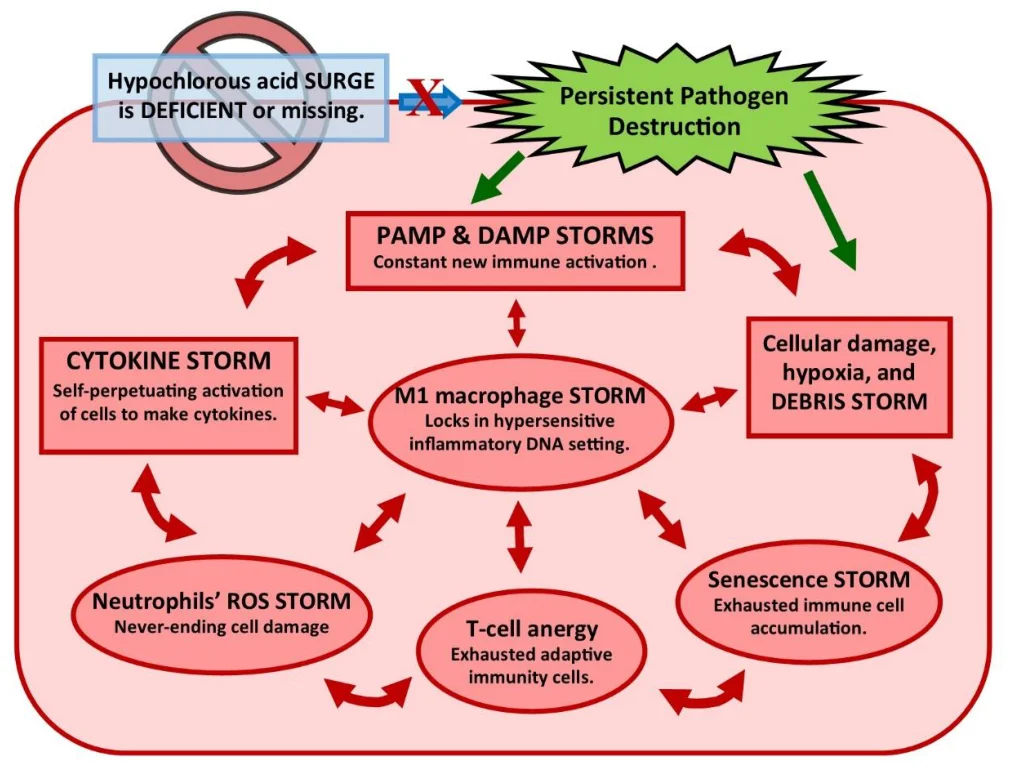
Locked-in immune storms are what happen when a short emergency never truly ends. Instead of turning off, the system stays stuck in attack mode and slowly burns the body down from the inside.
Locked-in storms eat at us for decades
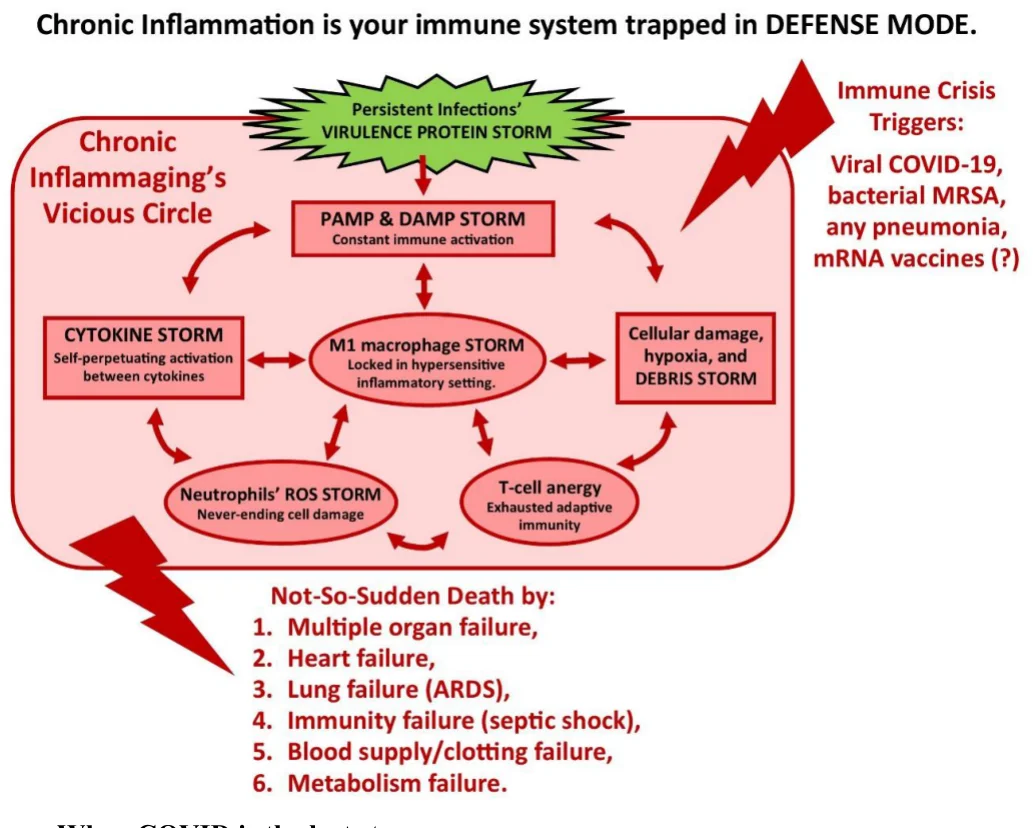
When any part of the defense cascade fails to resolve, the immune system stops behaving like an emergency service and starts behaving like an engine jammed at full throttle. Cytokine surges trigger more cytokine surges, debris and hypoxia keep generating fresh DAMP alarms, persistent infections leak PAMPs, and exhausted T-cells can no longer apply the brakes. Instead of brief, contained flares, the body sinks into self-sustaining storms—M1 macrophage storms, ROS and HOCl storms, debris storms, and cytokine storms that continually feed one another. Damage is no longer confined to the original battlefield; vascular endothelium, lungs, heart, muscles, and metabolic organs are all caught in the crossfire.
Over time, this locked-in attack mode produces the classic “inflammaging” picture: multi-organ strain, impaired heart and lung function, clotting tendencies, metabolic derailment, and accelerating physical decline. The infection that lit the match may have been small or long past, but a primed, overworked immune system—trapped in loops of PAMPs, DAMPs, and relentless activation—slowly becomes Death’s assistant instead of the body’s guardian.
When COVID is the last straw
COVID-19 is often the trigger for the end, but not the root cause. The deeper problem is years of persistent PAMPs and DAMPs from chronic mucosal infections that keep the system hovering in a hyper-reactive state. That cycle of chronic inflammation—persistent mucosal infections → PAMP and DAMP storms → M1 activation → cytokine storms—leads to debris accumulation, ROS overproduction, and T-cell exhaustion, creating a self-sustaining hyperinflammatory state.
When a secondary trigger like COVID-19 arrives on top of this, the primed system can tip into uncontrolled, body-wide inflammation. That escalation expresses itself through six common lethal pathways: multiple organ failure, fulminant myocarditis and cardiogenic shock, acute respiratory distress syndrome, sepsis and septic shock, thrombotic events with vascular collapse, and full-blown metabolic catastrophe with rapid wasting and derailment of glucose and lipid control. The mechanism of death varies, but the underlying cause is the same: an exhausted immune system that cannot shut off.
The only sane strategy is not to play at all.
Once the cycle is self-perpetuating—chronic DAMPs and PAMPs driving constant macrophage activation, unending cytokine and ROS storms, accumulating tissue damage, and still more DAMPs—the immune system reaches a practical point of no return. COVID-19 or another severe infection then acts as a final catalyst, the last straw that overwhelms already hyper-reactive pathways and accelerates damage into one of those lethal outcomes.
If the immune system is this expensive to run and this easy to trap in permanent war, then the only sane strategy in older age is ruthless conservation: keep battles small, rare, and brief. The rest of the book shows how to do exactly that by cleaning up the body’s borders—especially the mouth and upper airway—so that immune storms become rare events instead of a chronic weather pattern.
The rest of this book is about exactly that: practical ways to clean up the body’s borders, especially the mouth and upper airway, using upgraded hygiene and bio‑identical chlorine chemistry so that your immune system can finally live more days in peace than in war.
First, let’s have a deeper look into how we get infected since this where rubber meets the immunity’s mucosal road.