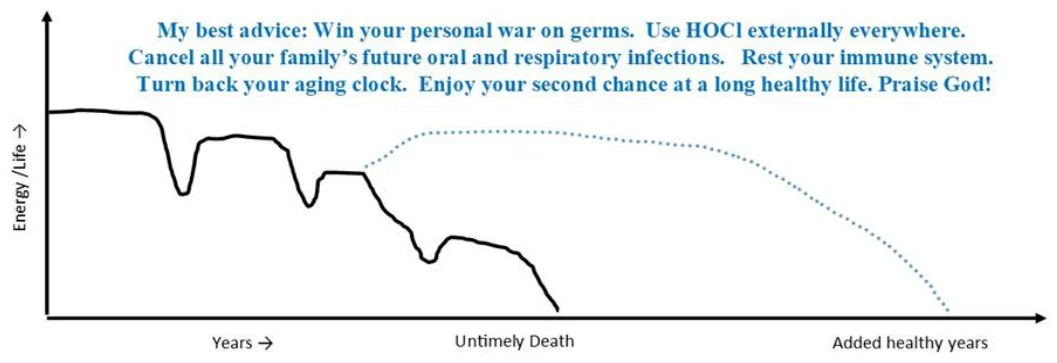
If you have read this far, you have walked the same path the author did: from the dental chair, peering into the mouths of older patients, to the immunology lab, tracing the same destructive cascade that shows up in gum disease, cystic fibrosis, obesity, severe COVID, and the rapid decline of the frail elder who “never really came back” after one last infection. The storyline is simple but unsettling: much of what we call aging is the cumulative cost of running the immune system too hard, for too long, against preventable battles on a few inches of living surface.
This chapter is not a full review. It is a final pass through ten of my own discoveries—ten “I did not know that” moments—that pull the book’s arc into focus and point toward what comes next for patients, professions, and research.
1. I did not know that aging could be understood as chronic immune overuse.
Most people are taught to see aging as a passive slide: genes, time, and bad luck. The central reframing of this book is that aging, as it is commonly experienced, is often the accumulated repair bill from decades of repeated immune activation. Every flare of gum disease, every sinus infection, every biofilm‑coated denture or appliance demands a full emergency response: cytokines surge, white blood cells mobilize, and hypochlorous acid is forged to kill germs and neutralize their toxins. Occasional pulses are survivable; thousands of pulses, over decades, become inflammaging.
2. I did not know that the aging immune system is obedient to the point of exhaustion.
Clinical language often describes the immune system as if it were misbehaving— “overreacting,” “attacking the body,” or “inflammation for no reason.” Through the mucosal lens, a different picture emerges. An immune system that spends years in high idle is not necessarily crazy. It may be faithfully responding to chronic biofilm, dentures that never get truly disinfected, and upper airways that stay colonized. In that view, the problem is not a system gone rogue. The problem is a system never allowed to stand down.
3. I did not know that our main infection battlefield is so small and so accessible.
The body’s borders run everywhere, but for most older adults the mouth, nose, throat, and upper airway are the decisive front lines. They are small. They are ordinary. They live in the bathroom mirror. Yet they are where chronic colonization, biofilm, and danger signals most often begin. Once you see that, aging stops looking like abstract biochemical fate and starts looking like obedience to a continuous stream of alarms from a few square inches of poorly managed mucosa.
4. I did not know that our white blood cells’ own primary antiseptic is CHLORINE.
To most people, chlorine belongs in laundry rooms, swimming pools, and bleach bottles. Yet one of innate immunity’s most striking design choices is that neutrophils generate hypochlorous acid as a central weapon inside their killing chambers. The green enzyme in pus, myeloperoxidase, exists largely to turn hydrogen peroxide and chloride into HOCl. The same chemistry that disinfects drinking water and surgical instruments is what the immune system reaches for when it must sterilize a microscopic battlefield. Chlorine is not an intruder. It is part of the language immunity already speaks.
5. I did not know that chlorine’s attack is selective rather than random.
The popular image of chlorine is indiscriminate burning. The biochemical reality is more precise. Hypochlorous acid shows strong practical selectivity for sulfur‑rich virulence machinery—cysteines, disulfide bonds, and vulnerable protein structures that pathogens depend on for adhesion, invasion, toxin delivery, and biofilm scaffolding. When those sulfur centers are oxidized, virulence proteins misfold, aggregate, and lose function. That is why a low‑concentration HOCl solution can act as a powerful anti‑virulence agent without dissolving the host. Chlorine’s real work is to un‑zip the enemy’s tools faster than they can be repaired.
6. I did not know that chlorine biochemistry may also help bring inflammation to an end.
The story does not stop with germ killing. The book’s discussion of N‑chlorotaurine suggests that downstream chlorine species may participate in resolution chemistry, helping tissue move from high alarm back toward homeostasis. If HOCl is the blade, NCT may be part of the sheath. That possibility matters because the deepest threat in aging is not that we can mount inflammatory pulses; it is that we cannot easily shut them off. Chlorine biochemistry appears to sit not only at the front of the cascade but also near the door that leads back to peace.
7. I did not know that modern oral hygiene still had a missing ingredient: Antisepsis.
Dentistry did not ignore W. D. Miller. It kept his first step—mechanical disruption of plaque—and his third step—restoration of damaged structure. What it largely failed to institutionalize was Miller’s missing middle step: safe, routine, daily antisepsis strong enough to suppress pathogenic biofilm and gentle enough for lifelong use. Brushing and flossing without meaningful antimicrobial completion can leave mature biofilm and virulence proteins on the field. In young mouths that may be tolerable. In elder mouths, it is often not. Mechanical hygiene without daily antisepsis is a half‑finished strategy.
8. I did not know that dentures worn 24/7 can act as infection nightmare reservoirs.
Many people still think of dentures as inert plastic chewing tools. The evidence woven through this book says otherwise. Denture surfaces can harbor dense, mixed‑species biofilms, including ESKAPE pathogens and MRSA. In long‑term care facilities, unsterilized dentures become quiet reservoirs and carriers, seeding the upper airway with virulent organisms day and night. A plate worn 24 hours a day with 10⁶ or 10⁷ colony‑forming units per gram is not just a cosmetic or odor problem. It is a chronic infection device sitting on top of already vulnerable mucosa.
9. I did not know that profit structures decide which scientific questions never get asked.
The cystic fibrosis story makes this uncomfortable point clear. Once CF care became organized around extremely expensive partial rescue with modulators, physiologically coherent, low‑cost replacement ideas—such as carefully dosed chlorine‑assisted lung hygiene—received little serious trial attention. The biology of CF screams “chlorine deficiency at the border,” yet very little therapeutic imagination has been spent on directly supporting that missing chemistry. The lesson is larger than CF. Modern medicine does not only make mistakes in what it recommends. It also makes mistakes in what it quietly fails to study when there is no obvious patent, proprietary device, or commercial upside.
10. I did not know that graceful aging might be more negotiable than we were told.
This book does not claim that aging can be erased, nor that every illness can be prevented. It argues that a surprising fraction of what we fear most—frequent infections, long recoveries, sudden irreversible declines—may be more negotiable than we have been taught if we drastically reduce chronic microbial and biofilm burden at the borders.
The point is not that Searbicide or HOCl rinses are magic. The point is that a tired immune system can be spared thousands of unnecessary battles if the few inches of living surface in the bathroom mirror are kept chemically as clean as the designer of our innate defenses clearly intended.
What the general reader can do now
For the ordinary reader, the practical takeaway is not complicated. Protect the borders. Respect what lives on your teeth, tongue, dentures, gums, skin, and upper airway. Upgrade mechanical routines with gentle, physiologic hypochlorous acid so the immune system does not have to run at full throttle against the same preventable biofilms every day.
Do not drink bleach. Do not improvise inhalation therapies. Yet. But do treat daily antisepsis as a serious, repeatable way to make infections rarer, smaller, and shorter. Every day that the immune system spends in peacetime rather than in war is a day you age more slowly.
What the professional reader should take away
For clinicians, the message is sharper. Chronic oral and upper‑airway infections are not peripheral comfort problems; they are central drivers of inflammaging. Elder dentistry cannot remain a craft of rebuilding wreckage on infected foundations. Medicine cannot keep treating chronic inflammation as idiopathic fate while ignoring the colonized mucosal surfaces that command so much immune effort. Profession‑level maturation means accepting focal homeostasis as a legitimate therapeutic goal, seeing dentures as infection devices until proven otherwise, and treating daily antisepsis as essential elder care rather than as a cosmetic afterthought.
A staged research agenda
For researchers and agencies, the book proposes a staged agenda rather than a single grand claim. First, consolidate what is already established: the chlorine biochemistry of innate immunity, the safety profile of low‑concentration HOCl in periodontal and wound care, and the basic feasibility of kitchen‑level formulations. Second, expand proof‑of‑concept work: cystic fibrosis sputum studies, inhaled N‑chlorotaurine data, obesity plus LPS pneumonia models, and other early findings that suggest real resolution support. Third, draw bright lines around forward‑looking hypotheses: therapeutic chlorine for deep lung disease, cytokine modulation, senescence biology, and metabolic inflammaging, always within formal trial structures and never as casual home therapy.
Final patient guidance and encouragement
The final encouragement is simple. Aging will still come. But it does not have to come as fast, as hard, or as helplessly as many people now expect. You cannot change your genes, and you may not be able to change every habit. You can change how clean, in a scientific sense, you keep the few square inches of living surface where the outside world meets your bloodstream. If you respect the immune system’s costs, reduce the number and size of its battles, and give it back more days in peacetime, you may find that graceful aging feels less like luck and more like good border management. That is the long game. That is the point of the book.
Proof of Anti-aging Concept: Okinawan Superagers are Miller’s perfect adherents.
In the Okinawan “blue zone,” decades of observation have shown that long life is not an accident of one magic food or one gene. It is the cumulative effect of a thousand small, disciplined choices that keep the immune system mostly in peacetime—clean mouth and nose borders, modest calories, plant‑rich meals, preserved teeth, daily movement, and strong social ties.
When researchers look under the hood, they find what this book has argued from the beginning: successful agers and their offspring carry lower loads of pro‑inflammatory cytokines such as IL‑6 and TNF‑α, and more favorable patterns of anti‑inflammatory mediators like IL‑10, compared with typical older adults. Their blood chemistry reflects lives spent with fewer PAMP alarms and shorter, more decisive immune battles.
That population also happens, almost incidentally, to practice a version of Miller’s ideal oral hygiene. Teeth are valued and retained; daily cleaning is thorough; green and jasmine teas bathe the mouth with antimicrobial catechins morning and night; and overt periodontal destruction is much less common than in many Western cohorts. In other words, they live close to the focal homeostasis that Miller could only imagine—quiet mouths, quiet arteries, quiet brains.
The proposal in this book is not that everyone must become Okinawan or carry the FOXO3 longevity genotype. It is that the hygiene side of their success can be democratized. A simple HOCl‑assisted routine—brushing and interdental cleaning, followed by a low‑ppm HOCl rinse for teeth, tongue, and dentures, plus the same physiologic antiseptic mist on skin and minor wounds—gives ordinary families a way to reproduce the key biochemical feature of that lifestyle: lower chronic cytokine tone driven by cleaner mucosal borders.
If daily HOCl use can even partially emulate the immune quiet of populations like Okinawa, then the “normal” trajectory of aging shifts. More people can expect to reach very old age with fewer infections, fewer inflammatory crises, and more years spent in the calm, regenerative side of the immune system’s design.