We have seen HOCl as the chlorine blade. Now we zoom in on what that blade actually cuts: virulence proteins. If we can disable microscopic enemy proteins, we can defeat both infections and inflammation.
Proteins are the central machines of life and disease, and their folded shapes are the key to virulence, immune signaling, and the way hypochlorous acid (HOCl) shuts both down.
At its core, innate immunity is a protein-targeting war plan: disrupt pathogen virulence proteins while sparing and supporting host defenses. Once you see that microbes live and die by their proteins, chlorine’s role becomes obvious.
Proteins as nanomachines
Proteins are long chains of amino acids that fold into highly specific three‑dimensional shapes, collapsing from a linear sequence into helices, sheets, and then a unique 3‑D form that may join other chains into working complexes.
Proteins become nanomachines that act as chemical reaction catalysts, sensors, scaffolds, DNA switches, and motors, turning chemical energy and binding events into work inside every cell.
Binding: the protein superpower
A protein’s superpower is binding. Its surface grooves and pockets recognize and cling to specific partners: host receptors, other proteins, sugars, or nucleic acids.
The precise tertiary and quaternary structure, plus the local chemistry of side chains, gives each protein its own binding “handshake.” Often, this recognition is fine-tuned by small conformational shifts (“induced fit”) and by local conditions such as pH.
The catch is that this precision makes virulence proteins exquisitely sensitive to structural damage. Even a modest distortion in a key binding site can abolish attachment, enzymatic activity, or toxin delivery.
Disulfide bonds: virulence lock points
As you saw earlier, HOCl unzips proteins; here is why virulence proteins are especially easy to unzip.
Many extracellular and virulence proteins depend on disulfide bonds – covalent links between cysteine residues – to stabilize their final shape. These “sulfur bridges” are often added after folding and act like lock pins that secure the mature protein in a stress-resistant form.
Virulence adhesins, invasins, and toxins frequently use disulfides to withstand the hostile extracellular environment while they bind, cut, or poison host tissues. Break those bridges, and their architecture loosens or collapses, leading to loss of stability, misfolding, aggregation, and loss of function.
Why HOCl targets sulfur?
HOCl, the frontline oxidant produced by neutrophils, reacts rapidly and 10,000 times more preferentially with sulfur-containing residues – especially cysteine and disulfide bonds – compared with most other amino acids. Chemically, ‘soft acid’ chlorine species are drawn to ‘soft bases’ sulfur sites like cysteine thiolates, making sulfur-rich virulence proteins prime HOCl targets.
Kinetic studies show that disulfide-containing peptides and proteins react with HOCl with very high rate-constants. Oxidation produces sulfenic, sulfinic, and sulfonic derivatives that cleave or remodel disulfide bonds and destabilize protein structure.
HOCl as an anti-virulence weapon
When HOCl modifies the cysteines and disulfide bonds in virulence proteins, their delicate tertiary structures unravel. Binding pockets deform, catalytic sites are lost, and proteins misfold and aggregate.
The result is a broad, simultaneous shutdown of the microbial toolkit:
- Adhesins can no longer latch onto mucosa
- Invasion enzymes fail to penetrate or digest tissue
- Protein toxins and superantigens lose their ability to trigger lethal inflammatory cascades
In this sense, pathogens really are one-trick ponies: their success depends on correctly folded proteins. By selectively attacking sulfur centers, HOCl gives innate immunity a way to silence many virulence tricks at once.
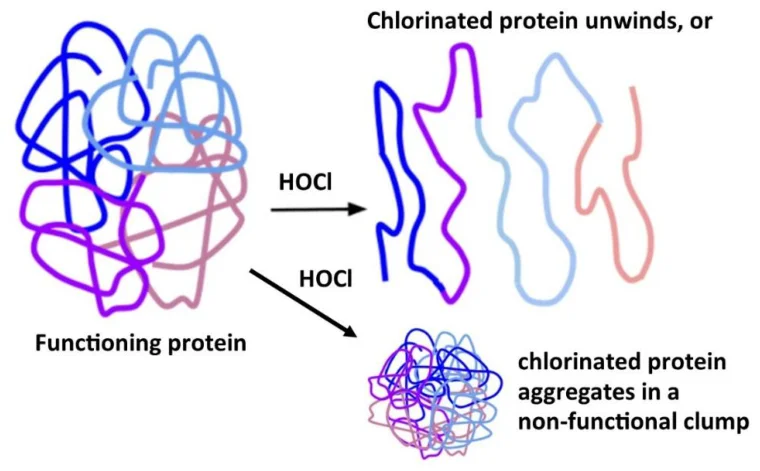
Chlorine therapy: winning the protein war
Because protein structure underlies both microbial virulence and host inflammatory signaling, precise disruption of pathogenic disulfide networks offers a unifying strategy to control infection and inflammation. HOCl, as the immune system’s own sulfur-targeting oxidant, is uniquely suited to that role.
Innate immunity’s war plan is a protein‑targeting war plan. An external chlorine therapy is designed to mimic that plan at low, mucosa‑safe doses: hitting accessible, exposed virulence proteins and biofilm scaffolds while sparing host tissues.
Before we go, look at how God designs proteins to twist themselves into bit of us. This is beta-lactamase made by mycobacterium tuberculosis. It fits and snip penicillin ring. And it assembles itself into this functioning shape. Amazing.
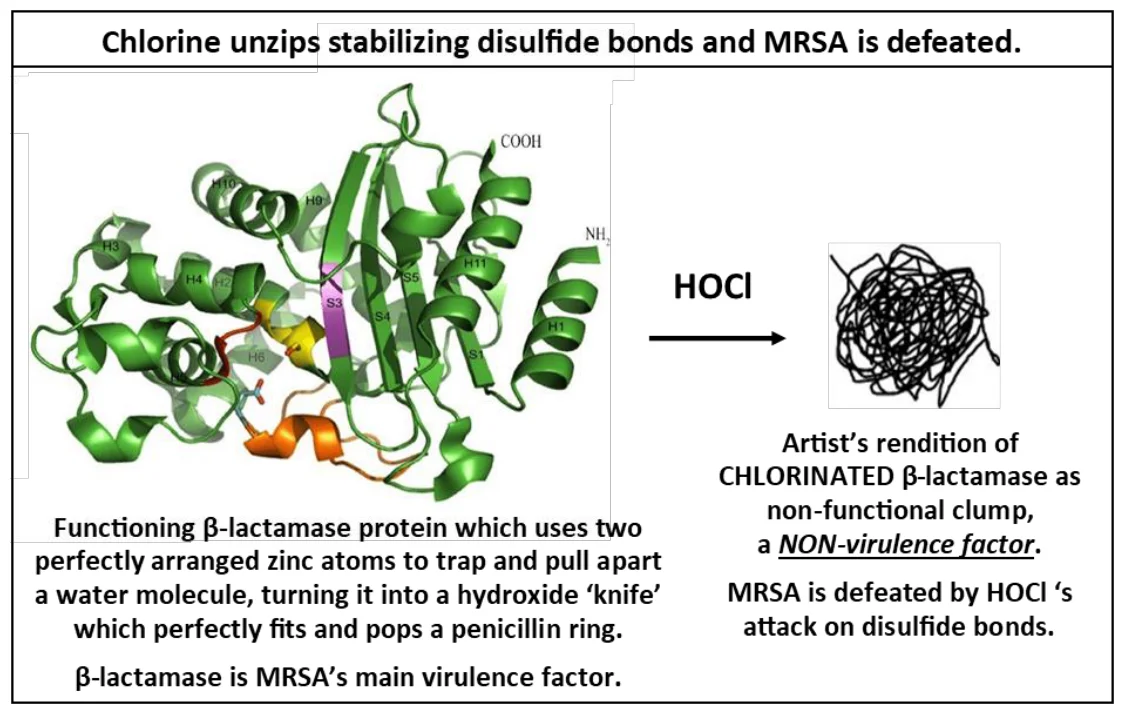
The structure or proteins is endless and if we could see them, we couldn’t deny the inherent Design involved as each one “fits” somewhere and “does” something. By design.
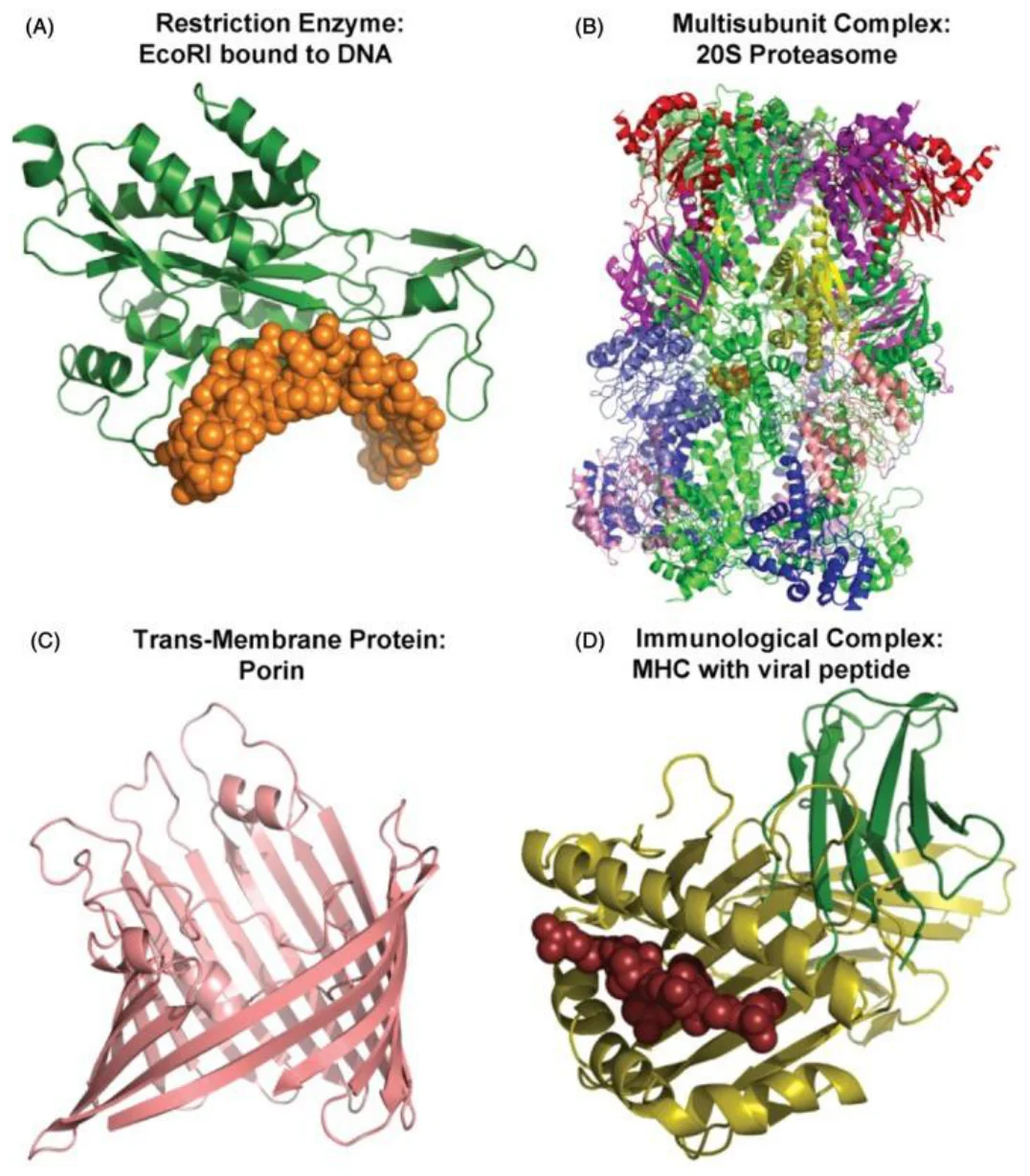
Thankfully, the Designer also built in a Fail-Safe chemical to unwind proteins that go rogue…
Chapter 4 showed why proteins are the decisive battlefield of infection. Bacterial enzymes, toxins, adhesion factors, capsules, and biofilm machinery all depend on precise protein shape.
The immune system wins many of its battles by wrecking those shapes faster than microbes can repair or replace them. The next question is obvious: what chemical tool does the body use to do that work? The answer comes from one of the great, underappreciated stories in neutrophil biochemistry: Seymour Klebanoff’s discovery of the myeloperoxidase-chloride system and the body’s own production of hypochlorous acid.