You are about to do something that modern medicine has strangely neglected: make, at home, a gentle version of the same chlorine chemistry your neutrophils use to save your life. Any time you handle chemicals in a kitchen, especially chlorine, safety and simplicity come first. This chapter is here to put guardrails around the recipe so you can confidently protect your mucosa without harming yourself.
Think of this as the “driver’s manual” for Searbicide. The rest of the book explains why it matters. This chapter explains how to make it safely, how not to improvise, and when to stop. If you skip everything else in the science sections, do not skip this chapter.
1. What Searbicide Is—and Is Not
Searbicide is not bleach in the everyday sense. It is a specific, low‑strength hypochlorous solution that has been taken out of the harsh, lye‑like zone where household bleach lives and moved into a mild, body‑friendly range similar to your tears or saliva.
Household bleach is mostly sodium hypochlorite in a very alkaline soup, with free sodium hydroxide 𝑁𝑎𝑂𝐻. That high pH (11–13) is what makes bleach such a good fabric whitener and drain cleaner—and such a bad idea on living mucosa. Searbicide starts from bleach as a chlorine source, but in the recipe we deliberately neutralize the excess hydroxide and bring the solution down near pH 6, where hypochlorous acid 𝐻𝑂𝐶𝑙 is the dominant species, not lye.
In plain language:
- Bleach is designed to clean toilets and clothes.
- Searbicide is designed to mimic the gentle chlorine your immune system already makes, at a tiny fraction of bleach strength, in a narrow pH window your tissues tolerate.
If what you are holding in your hand is still “bleach‑like”—thick, perfumed, harsh‑smelling, or straight from the jug—it is not Searbicide and does not belong anywhere near your nose, throat, or dentures.
2. The Golden Rules of Kitchen Chemistry
Before we touch a drop, fix these non‑negotiable rules in your mind:
1. Use only clean water for oral antiseptic grade Searbicide.
Potable is fine but distilled is the best. No pyrogens, no minerals, pure medical-grade water.
2. Use only plain, unscented household bleach.
No splash‑less, gel, scented, “color‑safe,” or thickened products. The label should list sodium hypochlorite as the active ingredient with a clear percentage (typically 5–8.25%). My favorite is 7.5% Disinfecting Bleach, any brand.
- Use only food‑grade vinegar acids White vinegar of known strength (usually 5% acetic acid) or food‑grade acetic acid. No mystery cleaners, no industrial acids, no “whatever is under the sink.”
- Follow the recipe. Do not free‑style. More is not better. Stronger is not safer. Your neutrophils do not run at “maximum,” they run at “just enough.” You should, too.
- Work in a well‑ventilated area. Never mix bleach concentrates in a small, steamy bathroom with the door shut. If your nose says “this is too strong,” listen and step away.
- Label every container. Keep away from children. Anything you make should be clearly labeled “Searbicide—Do Not Drink” with the date. Store it where a child or confused adult cannot mistake it for water or juice.
These rules exist so you never accidentally reproduce history’s mistakes with chlorine— from trench‑gas levels in World War I trenches to internet “bleach cure” fads. We want the chlorinated blessings of innate immunity, not the curses of industrial misuse.
3. Why Bleach Alone Is Dangerous to Mucosa
Bleach hurts mucosa for three main reasons:
- It is too alkaline. The free hydroxide in bleach behaves like diluted drain cleaner. It saponifies fats and disrupts proteins on contact. Your gums, cheeks, and sinuses are not meant to meet lye.
- It is too concentrated. Household bleach is thousands of parts per million of active chlorine. Searbicide lives down around tens of parts per million—two orders of magnitude lower.
- It is chemically unbalanced for living tissue. In bleach, most of the chlorine is present as 𝑂𝐶𝑙− at very high pH, not as 𝐻𝑂𝐶𝑙. In your body, the chlorine weapon is mostly 𝐻𝑂𝐶𝑙 in an environment with buffers and scavengers.
In the kitchen, that means: never use bleach straight, never “just dilute it until it smells light,” and never apply undiluted bleach to any part of your body. A “little burn” on the gums or throat is not “proof that it is working”—it is proof that you are injuring yourself.
4. What Could Go Wrong? Common Mistakes to Avoid
Part of safety is imagining how things can go wrong so you can avoid them. Here are the big three:
4.1 Using Bleach Straight or Nearly Straight Problem: Someone skips the dilution steps and uses a capful of bleach in a small cup, or worse, swabs the mouth directly with bleach.
Risks:
- Chemical burns of the mouth or throat
- Intense irritation, coughing, vomiting
- Long‑term sensitivity or tissue damage
Rule: If bleach touches your body undiluted, rinse with plenty of clean water and discard that batch. Do not use any home‑made chlorine preparation that looks, smells, or behaves like bleach.
4.2 Using Bleach Without Neutralizing the Lye
Problem: The user adds a small amount of bleach to water but skips the acid step that lowers the pH and shifts the chemistry into the HOCl‑dominant range.
Risks:
- You still have a lye‑like, alkaline solution
- Irritation and subtle chemical injury to mucosa over repeated use
- Over time, potential damage to teeth, gums, and airway epithelium
Rule: No acid step, no Searbicide. Dilute bleach in plain water without acid may be less aggressive, but it is not the bioidentical, mucosa‑friendly solution we are aiming for.
4.3 Over‑Acidifying and Making It Too Harsh
Problem: The user gets enthusiastic and adds too much vinegar or acid, thinking “a bit more will neutralize faster,” or mixes bleach directly with strong acid.
Risks:
- Chlorine gas formation in small spaces
- Sharp, choking smell, coughing, chest tightness
- Mucosal burns from low pH alone
Rule: Never pour concentrated bleach directly into concentrated acid. Always follow the sequence in the recipe and the stated volumes. If you see vigorous fizzing, smell a strong “pool shock” or choking odor, or feel immediate burning in the nose or chest, stop and ventilate. When in doubt, discard and start over.
5. The Searbicide Recipe: How to Make It Safely
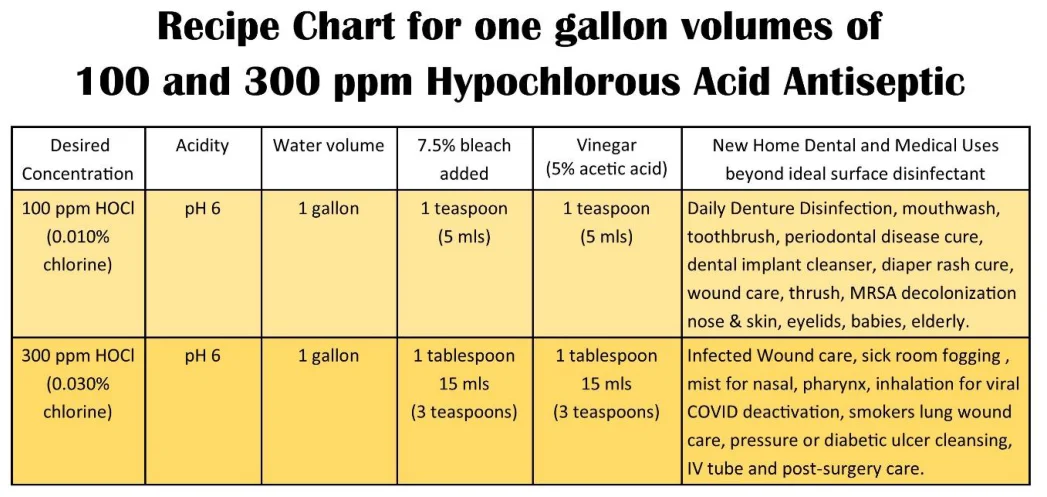
The goal of the recipe is simple:
- Start from a known concentration of sodium hypochlorite.
- Dilute it to a low active‑chlorine concentration in the tens of ppm.
- Neutralize excess hydroxide with a mild, food‑grade acid to bring pH near 6.
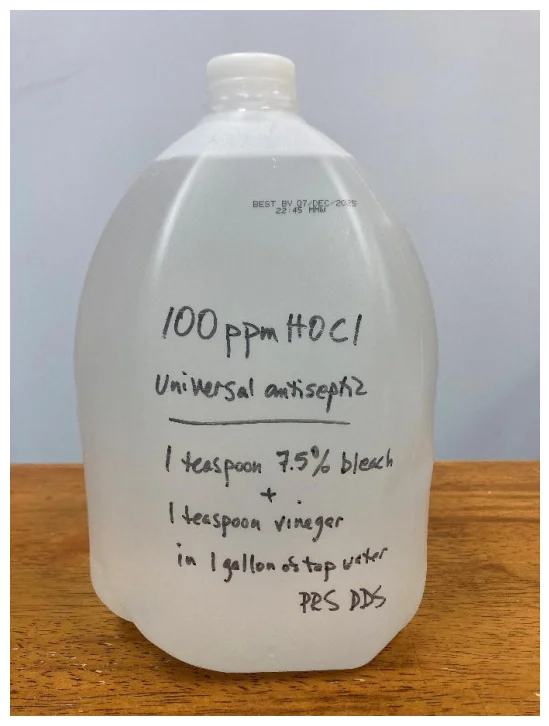
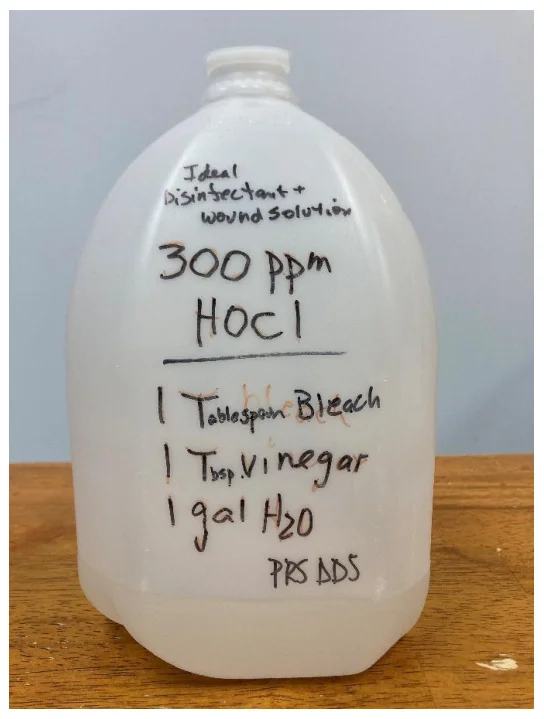
If that sounds too complex or stressful, that is valuable information. It may mean that at this stage of your life, you need someone to make it for you or you could consider using a commercially prepared HOCl product with known pH and concentration at least until you are comfortable with the kitchen chemistry.
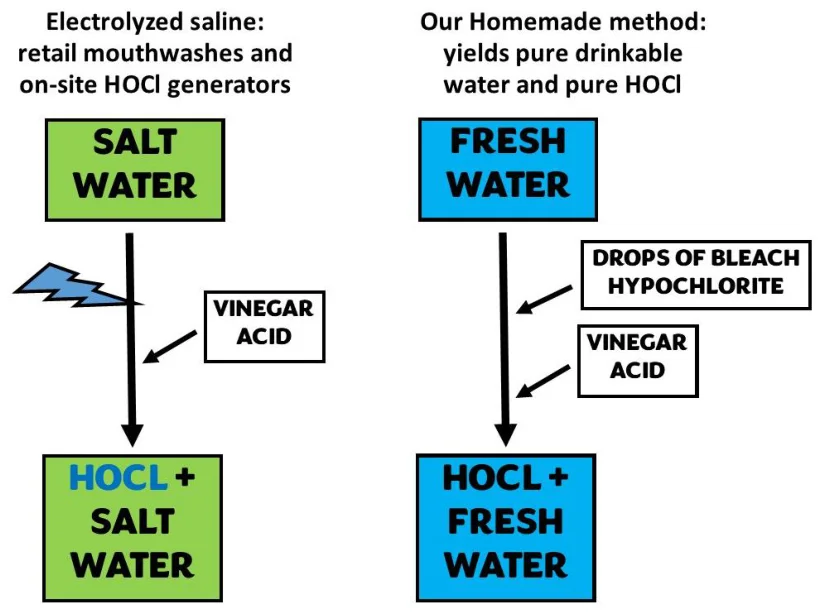
Please note: Every commercial HOCl product will be made from electrolyzing salt water so the remaining solution will be very salty and unable to be easily swallowed where is it needed.
I don’t know why. Maybe so they can sell it as “proprietary” and make it cost $30 a quart. Nobody figured out how to capitalize HOCl. Me neither, I guess. That’s why I’m giving it away.
6. Containers, Storage, and Shelf Life
Gentle chlorine solutions are not immortal. They slowly lose strength over time, especially when exposed to heat, light, and air. A few simple habits make Searbicide safer and more reliable:
- Use appropriate containers. Food‑grade plastic (HDPE) or glass is acceptable. Avoid metal containers and lids that can corrode. Avoid reused bottles that once held unknown chemicals.
- Label clearly and date every batch. Write “Searbicide, made on [date], Do Not Drink or Ingest” in large letters.
- Store cool, out of sunlight, out of reach. A cool cupboard or refrigerator is preferable to a hot bathroom counter. Never leave it where a child or confused adult could mistake it for drinking water.
Old Searbicide is not dangerous in the way old bleach is, but relying on a solution with unknown, degraded strength defeats the whole purpose of precise hygiene.
7. Checking and Refreshing Searbicide Strength
Hypochlorous acid is a modestly reactive molecule, which means Searbicide slowly loses strength over time instead of ever “going bad” or turning into something dangerous. Fresh 100 ppm solution in a reasonably clean, closed spray bottle will gradually drift toward about 75 ppm over the course of a week or two, and with longer storage will slide toward roughly 50 ppm. That 50 ppm range is actually Dr. Ono’s ideal sweet spot for a daily disinfectant–antiseptic: strong enough to inactivate germs quickly, yet gentle on living mucosa.
Even as Searbicide ages, its chemistry fails in a safe direction. The active HOCl quietly reacts away until, at very low single-digit ppm levels, the solution has essentially reverted to clean, mildly chlorinated tap water with little or no germ-killing power. In other words, there is no point at which Searbicide “spoils” or becomes toxic; it simply becomes weaker and eventually becomes ordinary water again.
Because the ingredients are so inexpensive, the practical rule is simple: when in doubt, pour it out and mix a fresh batch. Denture disinfection is a good example—each overnight soak should use fresh Searbicide so that biofilm and multidrug-resistant organisms are always hit with full-strength HOCl. HOCl aerosols and spray applications can be treated the same way: use freshly made solution whenever possible, especially for any routine that reaches the mouth, nose, or upper airway.
For the chemically curious, it is easy to measure chlorine strength directly. Simple test strips or indicator tape—such as the Hydrion chlorine indicator shown here—let you check the
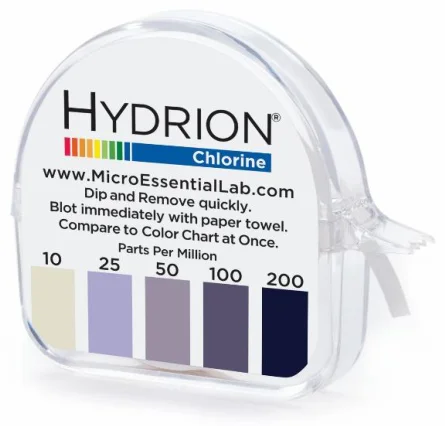
ppm level of a bottle in seconds. If the strip still shows your target range, you can use the solution with confidence; if it has faded down into low numbers, you have your cue to discard it and make a new, full-strength batch.
8. How It Should—and Should Not—Feel
Your body is a good instrument. Searbicide, used correctly on mucosa, should feel like a slightly “brisk” rinse, not an assault.
Generally, you should expect:
- A mild, clean smell, not an overpowering pool or cleaner odor.
- A very slight “edge” on sensitive mucosa, but no pain.
- No lingering burning, no redness, no difficulty breathing or swallowing.
If you notice:
- Sharp burning in the mouth, nose, or throat
- Immediate coughing, choking, or chest tightness
- Headache, eye irritation, or a strong chlorine‑gas smell
then stop at once, spit or rinse with plain water, and discard that batch. Do not push through, and do not assume you “just have to get used to it.” Your immune system never trains itself with chemical burns; you do not need to either.
8. Special Populations and Medical Common Sense
Because this book will land in the hands of older adults, many of whom have complex medical histories, we must state the obvious:
- If you have severe asthma, COPD, cystic fibrosis, or other serious lung disease, do not nebulize, inhale, or deep‑sniff any chlorine solution without explicit guidance from your physician. This book does not authorize home inhalation therapy.
- If you are on chemotherapy, high‑dose steroids, or biologic immune‑suppressants, your mucosa may be fragile and your infection risks unusual. Discuss any new rinse protocol with your oncologist or primary physician.
- If you have a history of chemical sensitivities or severe allergies, go slowly. Test first on a small area (for example, a quick diluted mouth rinse) and stop at the first sign of intolerance.
Searbicide is presented as an orthogonal hygiene tool, not as an alternative cancer treatment, not as a substitute for antibiotics when they are clearly needed, and not as a way to ignore medical advice. When in doubt, defer to your clinician. I am an old dentist, not your personal physician at a distance.
9. What This Chapter Protects You From
This safety and kitchen‑chemistry chapter exists for three reasons:
- To keep you from accidentally recreating the dangers that gave chlorine a bad reputation. We are not drinking bleach, we are not gassing ourselves, and we are not burning our mucosa.
- To keep you inside the sweet spot where biology and chemistry agree. Neutrophils use low‑pH, low‑concentration HOCl in a buffered environment. We want to mimic that pattern, not challenge it.
- To reassure your doctor and your family that you are not experimenting recklessly. Anyone reading this chapter will see that the Searbicide protocol is designed to cooperate with the body’s existing defenses and to respect basic toxicology.
If you treat Searbicide with the same respect you would give to a sharp kitchen knife— powerful, useful, but not a toy—you can safely reap its benefits. The knife is not the enemy. Carelessness is.